
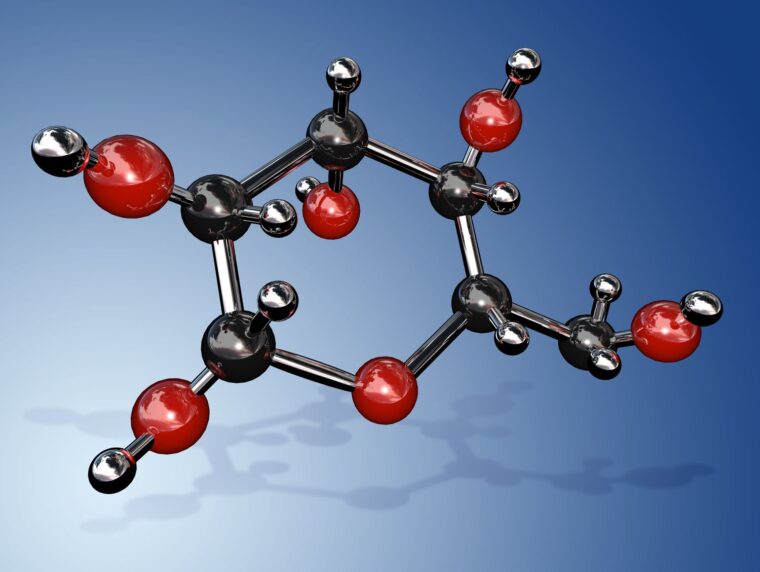


And Why He Said Some Foods and Herbs Have an Incomplete One
Dr. Sebi used the term molecular structure to describe whether the human body can fully recognize, use, and eliminate a food or herb. If the body cannot complete this process, the structure is considered incomplete.
Dr. Sebi often spoke about molecular structure when explaining why certain herbs and foods heal the body while others contribute to mucus, stagnation, and disease. For many people, this term can sound highly scientific – or vague – especially since he did not define it using conventional biochemical language.
However, when properly understood, what Dr. Sebi meant by molecular structure is both practical and central to his healing philosophy.
This article breaks down:
- What molecular structure means in scientific terms
- How Dr. Sebi used the concept differently
- What he meant by “incomplete molecular structure”
- Why this idea mattered so deeply to his approach to health and disease
The literal meaning of molecular structure
In conventional science, molecular structure refers to:
- How atoms are arranged within a molecule
- The shape, bonding, and stability of that molecule
- How that structure determines how the molecule behaves in the body
In biology and chemistry, a core principle is:
Structure determines function
If the structure of a molecule changes – even slightly – its function in the body can change dramatically. Two substances may appear similar, but the body may recognize and process them very differently.
How Dr. Sebi used the term “molecular structure”
Dr. Sebi was describing biological compatibility – whether the human body can fully recognize, utilize, and eliminate a substance.
When he said a food or herb “does not have the complete molecular structure,” he generally meant that it was:
- Foreign or incompatible with human physiology
- Altered from its natural, original form
- Difficult for the body to fully break down and assimilate
- Likely to leave behind mucus, waste, or inflammation
In his framework, the body thrives on substances that are original and complete their work inside the system – from digestion to cellular nourishment to elimination.
“Incomplete molecular structure”: what he actually meant
When Dr. Sebi said some foods or herbs had an incomplete molecular structure, he did not mean that atoms were missing or that the molecule was physically broken.
He meant the structure was functionally incomplete.
In practical terms, an “incomplete” structure was one that:
- Had been hybridized, refined, or chemically altered
- Lacked the full spectrum of organic, plant-bound minerals
- Could be digested but not fully assimilated at the cellular level
- Entered the body but did not exit cleanly
In other words:
The body could start the process with it – but could not finish.
Complete vs incomplete structure (functional comparison)
Functionally “complete” molecular structure
According to Dr. Sebi, these substances:
- Are native or close to their wild, original form
- Contain organic minerals the body can recognize
- Support electrical balance and cellular communication
- Can be fully digested, absorbed, utilized, and eliminated
- Leave no residue behind
These foods and herbs nourish the cell and support detoxification simultaneously.
Functionally “incomplete” molecular structure
These substances:
- Are heavily hybridized, processed, or refined
- Lack key organic minerals
- Disrupt electrical balance in the body
- Feed the stomach but not the cell
- Leave behind mucus, congestion, or waste
Digestion may occur, but completion does not.
The role of minerals and electricity
A critical part of Dr. Sebi’s thinking was that the body is an electrical system, and that:
- Cells communicate through electrical impulses
- Organic minerals act as conductors of that electricity
- Proper molecular structure allows energy, nutrients, and signals to flow
When foods lack these organic minerals, their structure is effectively unfinished from the body’s perspective. This is why he rejected:
- Synthetic vitamins
- Fortified foods
- Refined and processed products
They may contain isolated nutrients, but not the intelligence of a complete structure.
Why hybridization and processing were such a concern
Dr. Sebi believed that extensive hybridization and processing:
- Distorted natural molecular relationships
- Reduced mineral density and coherence
- Made foods harder for the body to recognize
- Increased mucus production and lymphatic congestion
This explains why many foods considered “healthy” in mainstream nutrition were excluded from his nutritional guide.
How this differs from conventional science
It is important to be precise:
- “Incomplete molecular structure” is not a formal biochemical term
- Dr. Sebi blended scientific language with observational and clinical experience
- His conclusions were based on outcomes, not laboratory definitions
That said, modern science does support related principles:
- Bioavailability matters more than nutrient quantity
- Ultra-processed foods impair digestion and metabolism
- Structural changes to food affect inflammation and elimination
- Mineral depletion in modern crops is a documented issue
So while his language was unconventional, many of his observations align with current research.
The deeper reason this concept mattered
For Dr. Sebi, disease was the result of accumulation – mucus, waste, and stagnation that the body could not eliminate.
“Incomplete molecular structures,” in his view, were a major cause of that accumulation.
Healing, therefore, required:
- Foods and herbs the body could recognize and fully process
- Substances that completed the full cycle: intake → use → elimination
- Supporting the lymphatic system rather than burdening it
The simplest way to explain it
A clear translation of Dr. Sebi’s idea is this:
Some foods and herbs go into the body, but they do not finish their work. They are not able to nourish, and leave residue behind – and over time, that residue becomes disease.
Final thought
When Dr. Sebi spoke about molecular structure, he was ultimately emphasizing compatibility, completion, and cleanliness within the body. The closer a food or herb is to its original natural design, the more likely the body is to recognize it, use it effectively, and release it without harm.
References
- Sebi, A. (Dr. Sebi).
Healing, Nutrition & the African Bio-Mineral Balance.
Usha Village / Teaching lectures and public talks.
– Core source for Dr. Sebi’s concepts of molecular structure, mucus, minerals, and biological compatibility. - Beckford, J.
Dr. Sebi’s African Bio-Mineral Balance.
– Authoritative secondary source compiling Dr. Sebi’s teachings, terminology, and nutritional philosophy in a structured format. - Dr. Sebi – Public Lectures & Recorded Teachings
Topics include:- Molecular structure
- Hybrid foods
- Organic minerals
- Mucus and disease
- Cellular nourishment vs stomach feeding
- Gibson, R. S.
Principles of Nutritional Assessment.
Oxford University Press.
– Discusses bioavailability, mineral absorption, and nutrient utilization. - Welch, R. M., & Graham, R. D.
“A New Paradigm for World Agriculture: Meeting Human Needs.”
Field Crops Research.
– Documents mineral depletion in modern crops and the impact of agricultural practices. - Fardet, A., & Rock, E.
“Ultra-Processed Foods and Food System Sustainability.”
Public Health Nutrition.
– Explores how food processing alters structure, bioactivity, and physiological response. - Cordain, L. et al.
“Origins and Evolution of the Western Diet.”
American Journal of Clinical Nutrition.
– Provides evidence of how modern food alterations affect digestion, inflammation, and chronic disease. - Katz, D. L., & Meller, S.
“Can We Say What Diet Is Best for Health?”
Annual Review of Public Health.
– Supports the principle that food quality and biological response matter more than isolated nutrients.