


Pao Pereira (Geissospermum vellosii) Herbal Monograph
Pao Pereira, also known as Pau Pereira or Brazilian Bitter Bark, is a powerful Amazonian herb approved and utilized by Dr. Sebi in his African Bio-Mineral Balance methodology. It is a key ingredient in his famous Chelation 2 cleansing formula, where it is valued for its potent bitter properties that support colon cleansing, mucus reduction, detoxification, and the removal of accumulated waste and toxins from the body.
Botanical Identification
Primary Botanical Name: Geissospermum vellosii Allemão (also known as Geissospermum laeve)
Synonyms:
- Geissospermum laeve
- Tabernaemontana laevis
- Geissospermum martianum
Family: Apocynaceae (dogbane family)
Common Names: Pao Pereira, Pau Pereira, Pereira Bark, Brazilian Bitter Bark, Quinarana, Pereiroá, Ubá-açú, Triguaaba, Camará-de-bilro, Pinguaciba, Bergibita
Pronunciation: “Pow Peh-RAY-rah”
Plant Description
Pao Pereira is a tall tropical evergreen tree native to the Amazon rainforest, reaching 15–30 meters in height with a straight trunk and dense crown.
Key Characteristics:
- Bark: Grey to yellow-brown, naturally peels and regenerates
- Leaves: Dark green, lance-shaped to elliptical
- Flowers: Small white flowers in clusters
- Fruit: Bitter fleshy berries with multiple dark seeds
- Other: Produces milky latex in some parts
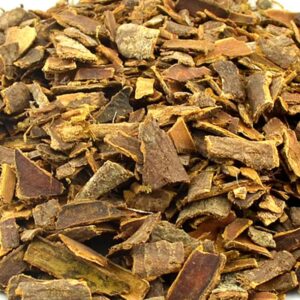
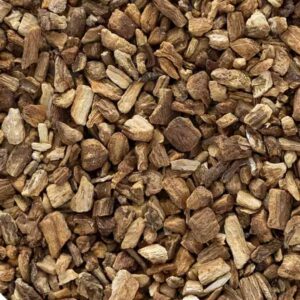
The primary medicinal portion is the inner stem bark, known for its intense bitterness.
Geographic Distribution
Native to northern South America: Brazil (Amazon region), Guyana, French Guiana, Bolivia, and Suriname.
Traditional & Ethnobotanical Uses
Used for centuries in Brazilian and Amazonian folk medicine as:
- Bitter tonic and general strengthener
- Support for fevers and malaria
- Digestive aid (indigestion, constipation, appetite stimulation)
- Liver support
- Pain relief
- Sexual vitality tonic
- Blood purification and cleansing
- Recovery from weakness and debility
Its extreme bitterness is traditionally linked to purification, digestion, and internal cleansing.

Recipes & Preparations
1. Traditional Bark Tea / Decoction
- 1-2 teaspoons (2-5 g) dried chopped inner bark
- Simmer in 250 ml water for 10-15 minutes
- Strain and drink warm
- Traditional dose: 1-3 cups per day
2. Strong Tonic Decoction
- 1 tablespoon bark in 500 ml water
- Simmer 20-30 minutes
- Drink ½ cup, 2-3 times daily
3. Tincture
- Fill jar ½ full with chopped dried bark
- Cover with 40-50%+ alcohol (vodka or grain alcohol)
- Steep 4-6 weeks in dark place, shaking daily
- Dose: 2-8 ml per day, divided and diluted in water
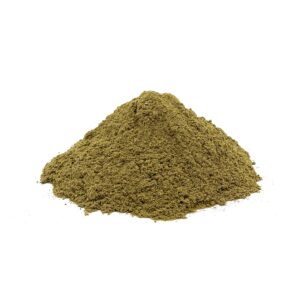
4. Powder
- 500 mg to 1 g of powdered bark mixed in warm water or honey, 1-2 times daily
Note: Start with low doses. The taste is intensely bitter.
Major Phytochemicals
The bark is rich in indole alkaloids and β-carboline alkaloids, including:
- Flavopereirine (primary bioactive β-carboline)
- Geissospermine
- Geissoschizoline
- Geissolosimine
- Geissolaevine
- Pereirine
- Vellosiminol
Expanded Research Highlights
Anticancer Research
Most modern interest in Pao Pereira centers on its β-carboline alkaloid-enriched extracts and flavopereirine, which have shown promising preclinical (in vitro and animal) anticancer effects.
Key Studies:
- Ovarian Cancer (2014): Pao Pereira extract demonstrated potent antitumor activity and significantly potentiated the effects of carboplatin. It reduced tumor growth and ascites in mouse models.
- Pancreatic Cancer (2013 & 2018): The extract inhibited proliferation of multiple human pancreatic cancer cell lines (IC₅₀ 125-325 μg/mL) and pancreatic cancer stem cells. It also showed synergy with gemcitabine.
- Prostate Cancer (2009 & 2019): β-carboline-enriched extracts suppressed prostate cancer cell growth, survival, and invasion. The extract and flavopereirine also attenuated testosterone-induced benign prostatic hyperplasia (BPH) in rat models by inhibiting 5α-reductase and androgen receptor.
- Colorectal Cancer (2019): Flavopereirine suppressed growth through p53 signaling.
- Oral Squamous Cell Carcinoma (2021): Flavopereirine inhibited progression via JAK-STAT pathway and LASP1 targeting.
- Breast Cancer & Others (2024 review): Flavopereirine induces cell cycle arrest and apoptosis in breast cancer, glioblastoma, hepatoma, and other lines through pathways such as AKT/p38 MAPK/ERK1/2.
Overall: Mechanisms include apoptosis induction, cell cycle arrest (often G2/M), inhibition of NF-κB, and synergy with chemotherapy. Human clinical trials are still lacking.
Neuroprotective Research – Geissoschizoline
Geissoschizoline is one of the most promising alkaloids for neurodegenerative conditions, particularly Alzheimer’s disease.
Key 2020 Study (Lima et al.):
- Potent dual inhibitor of human acetylcholinesterase (hAChE, IC₅₀ 20.40 μM) and butyrylcholinesterase (hBChE, IC₅₀ 10.21 μM).
- Exhibits mixed-type inhibition and binds to both catalytic active site (CAS) and peripheral anionic site (PAS) – potentially reducing amyloid-beta aggregation.
- Strong anti-neuroinflammatory activity: At low concentrations (1 μM), it significantly reduced nitric oxide (NO) and TNF-α release in LPS-stimulated microglia.
- Non-cytotoxic at effective doses (unlike some other alkaloids from the plant).
Additional supporting research shows whole bark extracts improve scopolamine-induced memory deficits in mice and possess anticholinesterase and anti-inflammatory properties.
Anti-Cancer Note on Geissoschizoline: Pure geissoschizoline shows limited direct anticancer cytotoxicity. A modified derivative (geissoschizoline N4-methylchlorine) from the related species Geissospermum sericeum induced apoptosis in gastric adenocarcinoma cells via caspase pathways.
Other Research Areas
- Antimalarial: Indole alkaloids (including geissolosimine) show in vitro activity against Plasmodium falciparum.
- Anti-inflammatory & Pain Relief: Bark fractions demonstrate antinociceptive and anti-inflammatory effects in animal models.
- Analytical: Recent HPLC-MS studies have better characterized the full alkaloid profile in bark extracts.
Traditional Herbal Actions
- Bitter tonic
- Febrifuge (fever reducer)
- Digestive stimulant
- Appetite stimulant
- Cleansing / depurative
- General tonic
Dr. Sebi & Alkaline Context
Pao Pereira aligns with the traditional use of bitter herbs for cleansing, mucus reduction, digestive support, and restoring internal balance. It is one of the herbs used in Dr. Sebi’s “Chelation 2” herbal formula – which was created for cleansing the colon/gastrointestinal tract.
Safety & Precautions
Human safety data is limited. Avoid or use caution with:
- Pregnancy and breastfeeding
- Children
- Liver disorders
- Concurrent prescription medications
Long-term or high-dose use should be approached carefully due to potent alkaloids.
Sustainability: The bark naturally regenerates when harvested properly. Choose ethical, cultivated sources when possible.
Summary
Pao Pereira is a powerful Amazonian bitter bark with a long history in traditional medicine for digestion, fevers, cleansing, and vitality. Modern preclinical research highlights strong potential in anticancer (especially flavopereirine) and neuroprotective (especially geissoschizoline) applications. While results are promising, robust human clinical trials are still needed.

Full References
- Lima, J.A., Costa, T.W.R., da Fonseca, A.C.C., do Amaral, R.F., Nascimento, M.D.S.B., Santos-Filho, O.A., de Miranda, A.L.P., Neto, D.C.F., Lima, F.R.S., Hamerski, L., & Tinoco, L.W. (2020). Geissoschizoline, a promising alkaloid for Alzheimer’s disease: Inhibition of human cholinesterases, anti-inflammatory effects and molecular docking. Bioorganic Chemistry, 104, 104215.
- Lima, J.A. et al. (2009). Geissospermum vellosii stem bark: Anticholinesterase activity and improvement of scopolamine-induced memory deficits. Pharmacology, Biochemistry and Behavior, 92(3), 508–513.
- Lima, J.A. et al. (2016). Antinociceptive and anti-inflammatory effects of a Geissospermum vellosii stem bark fraction. Anais da Academia Brasileira de Ciências, 88(1), 237–248.
- Yu, J. et al. (2014). The plant extract of Pao pereira potentiates carboplatin effects against ovarian cancer. Pharmaceutical Biology, 52(1), 36–43.
- Bemis, D.L. et al. (2009). β-carboline alkaloid-enriched extract from the Amazonian rain forest tree Pao Pereira suppresses prostate cancer cells. Journal of the Society for Integrative Oncology.
- Dong, R. et al. (2018). Extract of the Medicinal Plant Pao Pereira Inhibits Pancreatic Cancer Cell Proliferation. Integrative Cancer Therapies.
- Mbeunkui, F. et al. (2012). In vitro antiplasmodial activity of indole alkaloids from the stem bark of Geissospermum vellosii. Journal of Ethnopharmacology.
- de Araújo Marques, D. et al. (2023). Ethnopharmacological review, phytochemistry and bioactivity of the genus Geissospermum (Apocynaceae). Research, Society and Development.
- Li, J.M. et al. (2019). Flavopereirine Suppresses the Growth of Colorectal Cancer Cells. Cancers.
- Xu, J. et al. (2021). Flavopereirine Suppresses the Progression of Human Oral Squamous Cell Carcinoma. Drug Design, Development and Therapy.
- Wu, J.J. et al. (2024). Flavopereirine exerts anti-cancer activities in various human cancers. Recent review.
- Liu, J. et al. (2019). Pao Pereira Extract Attenuates Testosterone-Induced Benign Prostatic Hyperplasia in Rats. Scientific Reports, 9, 19777.
Disclaimer: This monograph is for educational and informational purposes only. It is not medical advice. Consult a qualified herbalist or natural healthcare practitioner before using Pao Pereira or any herbal product, especially if you have medical conditions or take medications.